

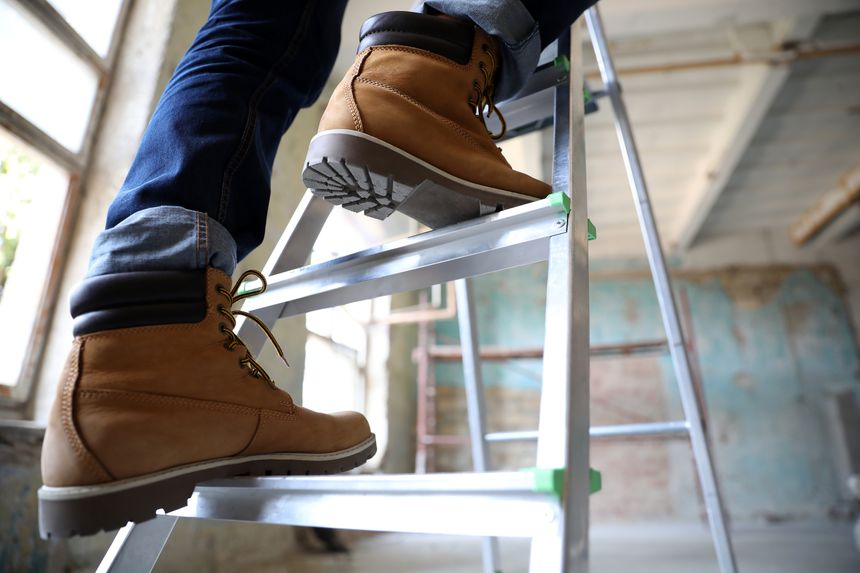

When the injured worker is the only witness to his own fall and the record holds two versions of it, based on credible evidence, he does not get summary judgment under Labor Law 240(1). The Second Department reaffirmed that last week.
In Gabriel v Top 8 Constr. Corp. (2026), an electrician's helper fell from a six-foot A-frame ladder while running a cable through an open-framed ceiling. He moved for partial summary judgment before discovery closed. Kings County denied the motion, adhered on reargument, and the Second Department affirmed.
The Court agreed that the plaintiff made his prima facie showing. Testimony that the ladder "suddenly shook," causing him to fall, was enough on its own. Defendants still beat it. They raised a triable issue on sole proximate cause, and where "credible evidence reveals differing versions of the accident, one under which defendants would be liable and another under which they would not, questions of fact exist, making summary judgment inappropriate."
What defeated the motion is significant. The employer produced a foreman's affidavit recounting the plaintiff's own statement that he had set two ladder feet on a piece of drywall. Plaintiff's own post-accident photographs showed the drywall. A safety engineer opined that a non-defective A-frame was an adequate device for the work.
Two takeaways:
- A hearsay admission may not carry the opposition alone, so corroborate it with a photograph or a physical observation.
- Name your witnesses in discovery responses early. The trial court admitted the foreman's affidavit in part because the plaintiff had that disclosure, and no note of issue had been filed.
/Passle/63eb9d4af636ea0fb4cba53a/SearchServiceImages/2026-10-16-01-09-17-797-6ad1793ddf7274b81173646e.jpg)
/Passle/63eb9d4af636ea0fb4cba53a/MediaLibrary/Images/2026-10-12-19-37-13-157-6acd36e95011758bb0bf63e5.png)
/Passle/63eb9d4af636ea0fb4cba53a/SearchServiceImages/2026-10-12-20-01-12-161-6acd3c886b66afb021ed02b8.jpg)